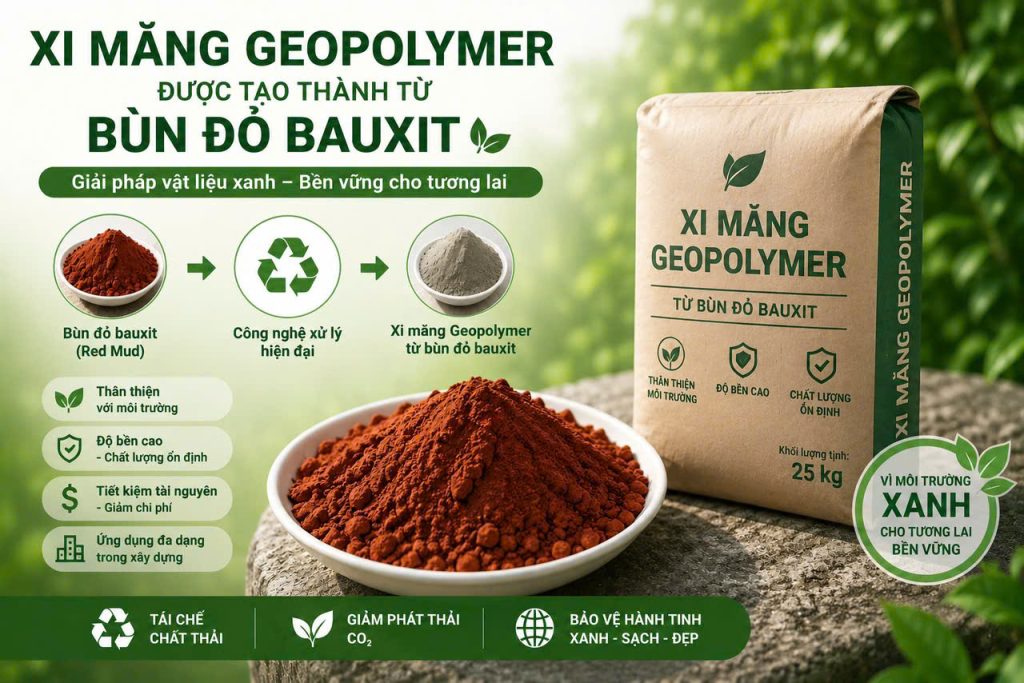
Red Mud

The most difficult alkaline waste to treat in the aluminum industry is neutralized and transformed into geopolymer cement by ProtectGD.

Problem / Context

Red mud is a waste product from Bayer’s alumina/aluminum production process, which is highly alkaline (pH 10–13) and has a characteristic red color due to iron oxides.

Storing red mud requires large reservoirs and carries the risk of spills and water pollution—a global environmental problem for which there is no economically viable solution.

Market size

Market size

  • Approximately 150–180 million tons of red mud are generated globally each year, with billions of tons remaining unsold.
  • Vietnam has large bauxite-alumina projects in the Central Highlands → significant source of red mud.
  • The urgent need for large-scale treatment solutions.

Technical

Technical specifications

  • Rich in Fe₂O₃, Al₂O₃, SiO₂, Na₂O
  • High alkalinity—both a challenge and an advantage for geopolymer reactions.
  • Ultrafine particles

ProtectGD solution

Unique feature: The high alkalinity of red mud can become a natural alkaline activator for the Geopolymer reaction, reducing the need for external activating chemicals. Development of Red Mud Cement (2026) towards commercial geopolymer cement from red mud.

BRING VALUE

Economy

Transform long-term storage costs into output; leverage readily available alkali to reduce activation costs.

Neutralizing alkaline waste reduces reservoir risks and stabilizes components in durable materials.

Environment

PROTECTGD VIETNAM JOINT STOCK COMPANY

Our mission is to build the next generation of sustainable building materials industry platforms — where business models create economic value while restoring the environment, contributing to achieving the Net Zero goals committed at COP26.