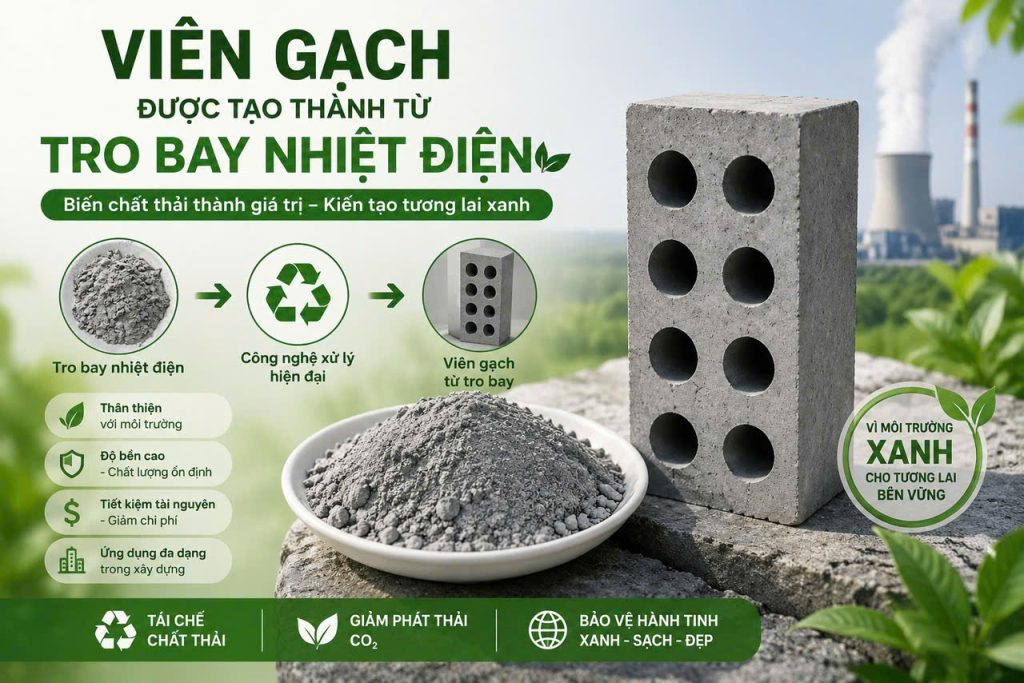
Coal Ash

The world’s most common source of pozzolan is readily available in enormous quantities, is stable, and is low-cost.

Problem / Context

Coal-fired power plants release enormous amounts of fly ash. Although some is used as a cement additive, the majority remains in ash ponds, polluting water and air, and occupying large areas of land.

Market size

Market size

  • Globally, approximately 750 million to 1 billion tons of coal fly ash are produced annually.
  • Vietnam: Tens of millions of tons of coal stockpiled at coal-fired power plants, facing significant pressure to dispose of them.
  • The demand for green building materials to replace OPC cement is increasing.

Technical

Technical specifications

  • Rich in SiO₂ and Al₂O₃ — ideal components for geopolymer reactions.
  • Spherical, smooth particles — easy to shape, high flexibility.
  • Class F / Class C with different pozzolanic properties

ProtectGD solution

Fly ash is a "classic" raw material for geopolymers. ProtectGD optimizes the formula to produce geopolymer cement and structural components from fly ash, directly replacing Portland cement with significantly lower carbon emissions.

BRING VALUE

Economy

Cheap and readily available raw materials → good profit margins; frees up waste disposal land for power plants.

Reduces CO₂ by 70–80% compared to OPC cement, treats ash pond residue, closes the circular loop.

Environment

PROTECTGD VIETNAM JOINT STOCK COMPANY

Our mission is to build the next generation of sustainable building materials industry platforms — where business models create economic value while restoring the environment, contributing to achieving the Net Zero goals committed at COP26.